
 Off Camera
by Rut Jimenez

Runestone, volume 12
Off Camera
by Rut Jimenez
Runestone, volume 12
Abuela Rosa waves at us from the porch as Mama parks the car.
In front of Abuela’s house is a row of vehicles from the guests who arrived before us. As always, we are the last to arrive. And still, Abuela reserved a space for us, right in front of the entrance, which my mother reluctantly uses. After she parks, Mama takes a big breath. She clenches the steering wheel, her knuckles going white as she buries her nails into the rubber. Abuela doesn’t notice and keeps waving at us, smiling widely but still keeping her distance. Assuming Mama will not wave back, I do it for her, smiling back at Abuela as I unbuckle the belt.
“Just for tonight, Mama,” I whisper to her, keeping a smile on. “I promise after the dinner we can go.”
Mama doesn’t answer. She quickly shuts the engine off. We get out of the car. Mama crosses her arms, walking behind me. Abuela, seeing me, opens her arms, and I run towards her, jumping to hug her while I rest my head on her shoulders. I try not to get too emotional because I know that will upset my mother. Still, I can’t help but feel relief at seeing Abuela again. I rarely see her, only two or three times a year. Always for holidays, like Christmas, sometimes Thanksgiving, and like this, New Year’s Eve. Mama and I only live an hour away from Abuela’s house. Yet, with their kind of relationship, it is as if we moved to another country instead of another town.
“Mija, so good to see you,” Abuela says as we separate, holding my hands. “It’s been so long since we last spoke.”
I smile. This year, Mama has come up with excuses to not make her mandatory holiday visits. She doesn’t say it, but I know she only comes to these events because of me. Since Dad died without me knowing his family, Mama wants me to be close to my maternal family. But I know she would never return to this house if it weren’t for me.
“Oh, Sandra,” Abuela smiles at Mama as her eyes spark. “Hija te he extrañado!” Abuela always says how much she misses Mama; she repeats it every time. Maybe because Mama still doesn’t believe it. Abuela gives Mama a big hug. She always had a sweet side for her daughter, treating her like a little girl. I wish Mama had that side with her, but she is only impatient with Abuela. This day isn’t different. Mama drops her hand to her sides and lets Abuela hug her. She just stands there until Abuela finishes.
“Nice to see you too,” Mama says with a brief smile. She passes her hands through her arms, like brushing away the hug.
“Well, let’s come in,” Abuela says. “We were waiting for you girls.”
Abuela takes us from the living room to the kitchen and from the kitchen door to the patio, where the party is. I stop at the doorway and look around. I see several tables heaped with different types of food: tamales, congris, maduros, puerco asado, and other Cuban dishes. The aroma of the food reaches me. I realize that we should have brought something, too. I have never learned how to prepare a Cuban dish, and I must be the only woman in my family who can’t. Mama hates cooking. She always related cooking to those long afternoons when she and Abuela cooked for Abuelo and his friends without receiving a simple thank you. Mama only cooked Cuban food just because Dad liked her dishes.
You conquer a man by his stomach, Mama always said. With her man dead and her having no one to conquer, there was no need to continue with Caribbean cuisine.
Beside the mass of food, there are many people. I count thirty people walking around the tables, talking in small groups. Mama takes a big breath next to me, and I follow, unsure if I can handle so many strangers at a family party.
Abuela picks up her pace, walking towards one of the tables. Mama and I follow her, walking behind as quick glances fall on us. When we reach a round white table, a man stands up and smiles. I recognize Tio Ricky, my mother’s older brother. Next to him, I see Tia Sol, his wife.
“Mi querida hermanita,” he says, approaching mom to give her a kiss. Mama smiles at him, being more affectionate with him than with Abuela. She hugs him, giving him a kiss on the cheek. Tio turns to me and gives me a hug. “Jocelyn cómo has crecido!” “I know, I’m getting big,” I say with a smile.
Tia Sol stands up from the table, greeting Mama and me. She begins talking with Mama. Mama asks her how her son is, and Tia asks her how I am, even though I’m standing beside her. Mama says good. Tia smiles, and then they grow silent. We are all standing in a circle, Abuela smiles, but no one says anything. The conversation around us has grown quiet. Suddenly, I’m too aware of what I am wearing and having second thoughts about my outfit choice. Mama and I decided on a semi-formal shirt and black pants, and I was stupid enough to actually be comfortable with my clothes. Looking around, I realize most women wear dresses, and I’m stuck wearing the same pants as my mommy. Now, all eyes are on me, so I cross my arms to cover my hideous shirt. But then I notice that everyone is standing with their back straight, and Tia’s excellent posture mocks me. I drop my arms to my sides and sink my shoulders back.
“Want a drink?” Tia Sol says. “The best Ron Cubano is in this party.”
She laughs, and although I’m glad the conversation is gaining momentum again, I wish the topic wasn’t alcohol. Mom doesn’t think the same. I see her eyes sparkle at the mention of rum. She looks past Tia. A couple of bottles are on the table, and next to them are several red cups. Tia keeps talking, but I know that Mama is not paying attention to her. I think Abuela has noticed how ridiculous we must look standing in a circle without speaking because she points at the chairs for us to sit. We gladly do. Tia asks me if I want something to eat, but the hunger I feel for some reason disappears. Mom grabs a bottle of rum and starts pouring some into a plastic cup. I see her holding on tightly to the bottle as the cup fills. My Tia has a plastic smile on her face. She watches my mother pour the rum cautiously. “I think I’m going to go find some music,” she says and gets up quickly. Abuela and Tio Ricky stare at Mama. Abuela folds her hands, pinching her palms. Tio gives me a quick look, and I lower my head. We had talked about Mama’s problem over the phone. He fears that Mama is on the same path that Abuelo was. But I assured him that was not the case. It is not like Mama has a drinking problem. I’m not one of those kids with a mom unbalanced by alcohol. I’m not. Mama just likes to have fun sometimes. A drink here or there, nothing else.
“Con permiso,” Abuela says, standing. “I’ll be right back.”
When Abuela leaves, Tio turns to me, smiling. “I can’t believe how big you are getting, Jocelyn. Fourteen already, huh? Sol and I can’t wait for your quinceañera. We hope to be there.”
“Oh, that’s still a little while away,” I say. I already had my quinceañera. Two weeks ago. I turn to Mama and frown. “Mama, I don’t think anyone drinks a full cup of rum.” Mama smiles, placing the bottle on the table. “How is that my problem?” She winks at me and takes a sip. I clench my fists, smiling back at her.
“Sonrian!”
I turn when the flash of the camera hits my face. I laugh at Abuela, who is holding her black camera with a smile. She looks down at the small device, clicking the round bottom to display the photos on the screen. Abuela nods and looks back at us, winking. “Salieron bonitos mis hijos,” she sings and sits down next to me.
“Do you always have to take pictures?” Mama snaps.
“Por supuesto,” Abuela answers. “What would be of us without the magic of photos? I may pick a new photo tonight for the Album Desk.”
There is nothing Abuela loves more than taking family photos. She says that memories fade away and die, but pictures are forever. So, she has our whole family history recorded in photos that she displays on the living room table. I was five years old when she made what we now call “The Album Desk.” I helped Abuela place the photos on our old wooden table, feeling every corner with memories of her wedding day, her first pregnancy, her first child going to college, and the birth of her first and only granddaughter. I saw her as she smiled and placed the glass panel on top of the photos so they could be there forever. Since then, Abuela has stopped everyone who comes to the house and made them admire her collection as she tells long and tangled stories about what every photo means.
“Mama, te he dicho, that you should buy a new camera,” Tio Ricky says with a smile. “That one is too old.”
“You know I always use this camera because it is my good luck charm,” Abuela answers. “The pictures are better here. And my Ricardo used to love the pictures of this camera too.” Tio Ricky drops his smile, and I stiffen, knowing what is coming next. Mama is already rolling her eyes, taking another sip. For a moment, Abuela is silent, and I think she will not bring up the subject. Maybe finally perceiving that only she can stand to hear about Abuelo. But she looks at me dreamily, and I know a story is coming.
“Your Abuelo used to love these parties,” she says. “He behaved like a child, always creating jokes and running around singing.”
Abuela sighs, shaking her head with a dreamy face. I can tell how much she misses him. How couldn’t she? He made her completely dependent on him. They met at seventeen and married at eighteen. Maybe if Abuela hadn’t been so young, she would have realized that Abuelo would never idolize her as she did him. But like Abuela always says, it was a different time and culture.
“I never thought no one would marry me,” Abuela says, her smile growing. “Your abuelo took pity on me and took me in.”
She laughs, and I join in with a hesitant smile. It does bother me how little she sees in herself. In Abuela’s pictures when she was younger, she was beautiful. Even now, she is handsome for her age. More than once, I caught our old neighbor watching her from his porch. I’m sure she had more than one guy drooling over her in her youth. Abuela doesn’t see the beauty that I see. She is old now, so I don’t bother trying to open her eyes. It is too late. I don’t want to transform into Mama, withering with every failed attempt to snap Abuela out of her delusion. Besides, imagine if I made Abuela upset and she stopped talking to me. Dad died and left me here to take care of Mama, a job I do twenty-four hours a day, seven days a week. With Abuela, I can rest from all of that. She is the only grownup I have left.
“I loved your Abuelo so much,” Abuela says.
I nod. Mom smirks and clenches the cup; now, she takes a big sip. Tio Ricky runs his fingers to his forehead. I have seen their reactions often when Abuelo is brought up in conversation. Abuela always says how loved he is in the family, yet she is the only person who talks about him. Abuelo died when I was about ten, but I don’t remember much about him. I always found that curious since I can remember everything from that age, but never him. I blame my mother.
Abuelo was a topic I couldn’t bring up to her. She always evaded the mention of his name.
The day Abuelo passed away, it was Dad who gave me the news. Mom stayed in her room the whole day, drinking at night. She woke me up around eleven and forced me to listen to her long speech about how happy she was that the devil was finally gone. Around midnight, Dad finally realized she was still going on and on, and pulled her to bed. The last thing I remember about that day is Mama’s laughter as Dad dragged her upstairs. Her laughter ended in a cry as she got to her room and into bed.
“Don’t be sad, Abuela,” I say, grabbing her hand. “Abuelo is in a better place right now.” “Yeah, Mama no te preocupes,” Mama answers. “I bet Papa is taking shots with Satan as we speak.”
Mama bursts into laughter as Abuela frowns, staring at her. I feel Abuela’s palm growing colder, and I gently squeeze her hand. Abuela drops her eyes to her camera, a smile appearing on her face.
“I’m going to take more photos,” she says, standing up before we can talk. She winks at me, patting my shoulder as she walks inside the house, obviously not taking more photos. I stare at Mama, rolling my eyes. I hate it when she makes Abuela uncomfortable. I could do the same thing to her, yet I choose to be civilized. Why can’t she do the same? Uncle Ricky clears his throat, shifting uncomfortably in his chair. “So Sandra,” he said, turning to my mother. “How is work?”
“Like you even know what I work on,” Mama says sharply, and the conversation stops there.
I look around, my eyes passing through the rest of the family. I see three of my cousins on the right, sitting together. The three of them whisper to each other and laugh. I twist my nose. Could they be laughing at me? I feel my face growing hot and shift toward the other side. Tia Sol is speaking to a man that I don’t recognize. He brings her a black speaker and puts it on one of the tables. Tia connects the phone to the speaker, and the song Guantanamera begins to play. Tia drops the phone on the table as she laughs, and the man and she begin to dance. Tio Ricky smiles from his seat while he watches his wife. He turns his back to my mother so he doesn’t have to talk to her or me.
“I think I’m going to see what Abuela is doing?” I say to Mama.
She takes her eyes out of the cup and throws me a painful look. The kind of look you give someone when they betray you. I stand up, feeling nothing. My legs guide me toward the house, not turning once to see Mama. I walk toward the living room, where I find Abuela sitting on a chair, elbows resting on the Album Desk as she stares at the photos. She turns to see me, her smile turning on. I look at her watery eyes and frown, wondering if she was crying. But that couldn’t be. Abuela never cries; she is never sad or upset. I don’t even think she can feel any other emotion besides happiness.
“What are you doing here? There is a party outside?” She says, patting the chair beside her for me to sit down.
“Yeah, but you are not there. I want to spend time with you.”
Abuela raises an eyebrow, a mischievous smile peeking in. “Did you leave the party because you wanted to see my collection of pictures?”
“You got me,” I say.
And that is an invitation for storytime. Abuela turns to the table, picking a photo for us to discuss. She always chooses a story related to the theme of the day. Because we are at a New Year’s Eve party, she picks every picture relating to that. There are four photos of the topic, so I’m in for quite a long ride. Abuela picks a photo of Abuelo smiling with a bottle of rum and a plate of puerco and congris on his lap. He smiles tenderly at the camera like a little child, his cheeks red. Abuela begins her story. As she speaks, I hear the music from the patio growing louder.
Tia Sol’s voice resonates through the thin walls as she sings her version of Carnaval. Abuela’s voice is getting lost between tia screams and the applause of the other family members. I want to tell Abuela to speak louder, but I know better than to interrupt her, so I lean forward, putting my elbows on the table to get closer to her. She sees this as a symbol of interest and extends the story.
“No se si recuerdas,” Abuela says. Her favorite line when starting stories: I don’t know if you remember. Most of the time, I didn’t. “This day was your abuelo’s turn to roast the pork. He was supposed to spin it on the rod for another half hour, but he was very drunk and kept spinning it and spinning it. The rod got so burned, and the pig so roasted that it was too much weight. The pig fell into the bonfire. Muchacha, when we picked it from there, it tasted like ashes, but we ate it anyway.”
I laugh. We stay in interrupted peace for almost twenty minutes until I hear a sound behind me. I turn and see my mother coming to us, the plastic cup in her hands, as she stumbles toward us. I ignore her and return to look at the pictures.
“Todo me da vueltas,” mom says and laughs. She walks past Abuela and me and sits across from us, putting her cup on the table while running both hands over her face. From my chair, I can smell the alcohol of the past twenty minutes. Everything has to be spinning for her.
“We are here watching pictures,” Abuela says with a smile. Mama’s face twitches in response. She stares at the picture we are seeing.
“Let me guess, the story with Papa and the burned pig,” Mom says. “Did you tell her what happened after the picture?”
Abuela looks at Mama, and Mama looks at abuela. I look at both of them. I get frightened when they glare at each other like that, in a language that only they can understand. I can swear I hear the music playing louder on the patio as if the family knows what happens when Abuela and Mama are alone in a room, and neither of them wants to hear it. They keep looking at each other for a while, but then Abuela sighs and drops her gaze.
“This other photo is also very interesting,” she says, refocusing. In the picture, Mama is wearing a pink dress and hugs Ricky as they awkwardly smile at the camera. “It was taken right before your cousin Alma’s quinceañera. You looked so beautiful in that dress, mija.”
Mama looks away from the previous picture and stares where Abuela is pointing now. She takes a sip of her cup, throwing her back toward the chair. “Papa hated that dress.” “No, he didn’t,” Abuela answers sweetly, still smiling at the picture. “When he saw you in it, he was a proud papa bear, saying how big and beautiful you looked. Esa es mi niña, he said.”
“Oh yeah, really?” Mama laughs half-heartedly. “Because I remember him grumbling something between the lines that the dress made me look like a cheap whore.” Abuela’s eyes twitch, her lips quivering but maintaining her smile. I don’t even know what to say. I can only stare at Mama with sympathetic eyes. A part of me wants to stand up, take her hand, and walk toward the door. But Mama takes another gulp of her rum, looking very comfortable, and I remain in my seat. I turn to my grandma and her cracked eyes and then to the back patio door. I don’t know what to do. Why is no one coming in? “But I guess you don’t remember that version, right?” Mama continues, tilting her head at Abuela. “You never remember what happens off camera.”
Abuela looks at Mama. Her smile is gone. “You always exaggerated everything, Sandra.” Mom frowns, her eyes watering, but maybe it is because of the alcohol. She then shifts her attention towards me. She points at the previous photo of Abuelo smiling at the New Year’s Eve party.
“After this photo,” Mama says. “Papa started telling everyone, even the friends I invited, about his many lovers. Who were they, how many there were, and even the different positions they explored. He said, and I quote, ‘because my wife wasn’t as flexible as they were.’ And when I tried to defend you, he-”
“Mentira!” Abuela yelled. She stood up, hands gripped to the border of the table. “That never happened. Aren’t you ashamed, Sandra, dirtying your father’s memory with lies like this?!”
I widen my eyes, looking back at Mama. For a moment, I imagine they might hit each other, collapsing against the table and fighting there on top of the photos. I can see Mama’s hands getting tighter around Abuela’s neck. But Mama does something worse; she laughs. A hysterical laugh comes out of her lips that makes Abuela shrink away. Mama places her hand on her chest like choking on the laughter, and then she sniffs.
“That is what you do, Mom,” she says. “Picking the side of history you want, with fifty photos on a table.” Mama stares at the photos, pressing her fingers to each one. “This house was always these fifty photos and never the complete album. No abusive father or delusional mother.”
“Mama!” I yell. I stand up, touching Abuela’s shoulder. Abuela starts sniffing, and then the sniffing turns into cries. I look at her, shocked to see her crying. I’m not sure what to do. I turn to Mama for her to do something, but she still looks at the table. I frown, heat running through my cheeks.
“Mama, you’re drunk,” I say. “Go outside.”
“Yeah, defend your grandmother, Jocelyn,” Mama says. Her eyes dart from photo to photo like she is not even here. “Sorry, I’m not helping you defend her. I wouldn’t know how to do it. No one taught me.”
And with that, Abuela shakes my hand away from her shoulder and looks at the table. She looks down at it, and a spark dies in her eyes. She looks back at Mama and then walks away. I see her walking toward her room. When I hear the door slamming, I sigh and sit again, staring back at Mama.
“Why did you tell her that?” I yell at her. “These pictures are the only things she has. The only thing that keeps her happy. That keeps her standing!”
“Why couldn’t she have chosen me to keep her standing?” Mama snaps and stands up. She slaps the table with the hand holding the cup. The cup gets crushed as puddles of rum fill the table. “She chose false memories over her own children. Worrying about them more than she ever worried about me!”
This time, it is my turn to smirk. I look at the cup in my mom’s hand. Now it’s a ball in her hand, the last alcohol drops rolling down her fingers. That is what keeps Mama standing. She sits down back in the chair, protesting like a child. I remain silent as I listen to her. I listen as I always do. I could ask her the same question she was asking Abuela. Why didn’t she choose me?
I let her speak until Tia Sol starts calling us to eat. The last memory is of all of us sitting together in front of the food for a family picture. Later, Abuela decided to put the image on the Album Desk. Now there are fifty-one.
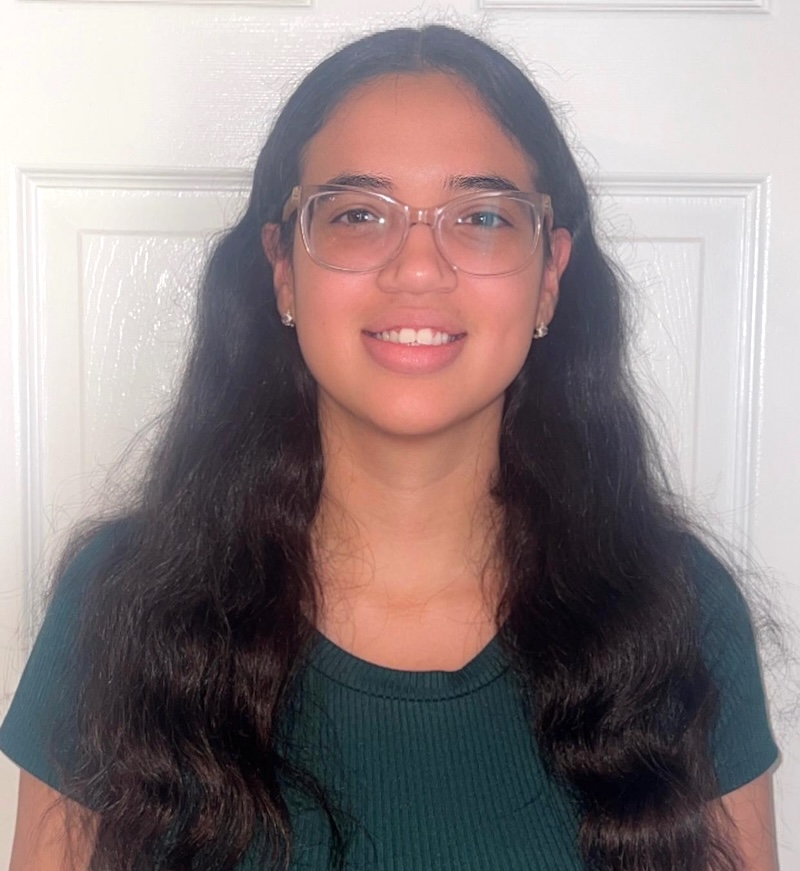
Rut Jimenez
Beloit College
Rut Jimenez is an aspiring fiction writer. She is pursuing a creative writing degree at Beloit College where she is focused on developing original fiction as she grows her voice as a writer.